
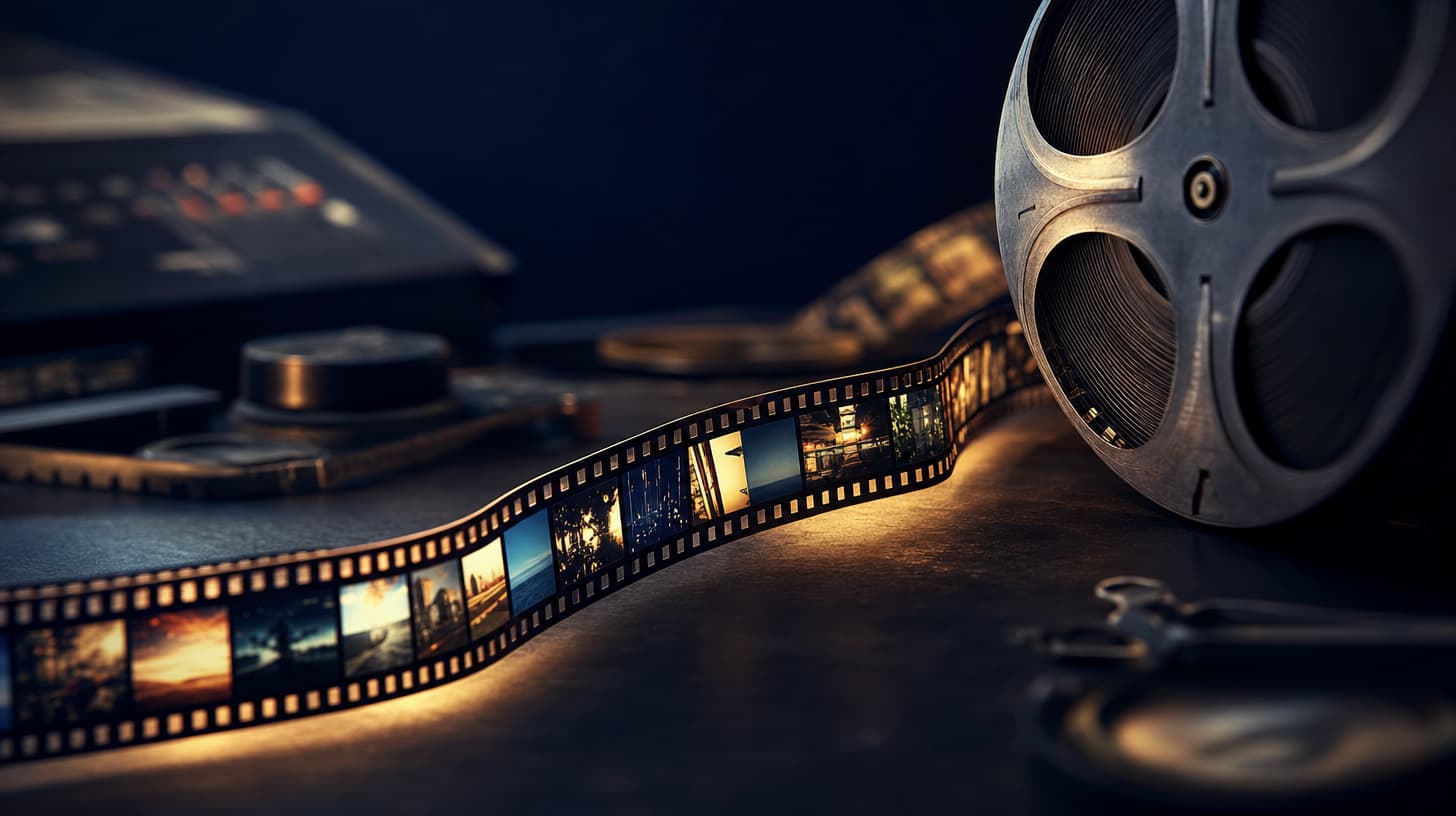
How to make movie recap videos with AI, legally
How to make movie recap videos with AI for a faceless channel: split the story into beats, generate segments, assemble the timeline, and stay copyright-safe.
Movie recap videos with AI are having a moment, and most tutorials chasing that search skip the part that decides whether your channel survives: what story you are allowed to recap. The version people picture, dramatic narration laid over footage lifted from a theatrical release, is the version that gets accounts struck and demonetized. There is a cleaner version that scales better and does not depend on a copyright gamble.
This is a workflow for recap-style narrative videos on a faceless channel, where you narrate a story and generate every visual instead of borrowing one. You break the script into beats, generate each beat as its own clip, then assemble the timeline in your editor. The story you recap is yours, licensed, or old enough to be public domain. The visuals are generated in the seedance2.so studio, which runs the Seedance model built by ByteDance, so there is no source footage anyone can strike.
TL;DR
- The recap format that scales is narration over generated visuals, not footage pulled from a copyrighted film.
- Only recap stories you own, have licensed, or that are old enough to be public domain, such as myths, folklore, and classic literature. Copyright terms vary by country, so verify status before you build an episode.
- Break the script into beats sized for the medium: 5, 10, or 15 seconds on the standard tiers, up to 30 seconds in the Seedance 2.5 studio.
- Generate each beat separately, then assemble in your editor. Use reference-to-video to keep recurring characters looking the same across beats.
- Native audio can carry ambient sound and effects per clip; a music-driven recap can lock its cuts to the beat with beat-sync-video.
- Register gives free credits with no credit card, and generations carry no watermark, so you can test the whole pipeline before paying.
The recap workflow, from beat sheet to timeline
A recap is already a sequence. You narrate one moment, then the next, then the next, and each moment wants its own picture. That structure happens to match how AI video actually behaves. Clips come out short, 5 to 15 seconds on the standard tiers and up to 30 seconds in the Seedance 2.5 studio, so a format made of short visual units fits the tool instead of fighting it.
That is why cutting a recap into segments beats trying to generate one long video. You ask the model for twenty small shots you can control, review, and reorder. The workflow has three moves: write and segment the script, generate each beat, assemble the timeline. Everything below is those three moves in order, with the copyright question settled first because it is the one that ends channels fastest.
Where the copyright line actually sits
The traditional recap channel leans on footage from an actual film and hopes fair use covers it. That defense is contested, depends on jurisdiction, and gets tested by copyright strikes long before it ever reaches a courtroom. The generated approach is not a loophole around that defense. It is a different route: you avoid the footage entirely and recap a story you have the right to tell.
Three sources of story are safe to build on. Your own original writing, which you obviously own. A work you have licensed from whoever holds the rights. Or a work in the public domain, meaning its copyright has expired, which covers a lot of myths, folklore, fairy tales, and old literature.
Public domain has two traps worth naming. Term length varies by country, so a story that is free in one place can still be protected in another. Verify the status of the specific work before you commit an episode to it, and treat this as a prompt to check rather than legal advice.
The second trap is the one people miss: a public-domain story does not free a modern film's version of it. A studio's adaptation carries its own protected material, including character designs, invented scenes, dialogue, and score. Recap the underlying old text, not a particular film's take on it.
Two more lines. Do not recreate a copyrighted film shot for shot and call it generated. Copying distinctive protected expression through an AI clip is still copying. And named franchise characters stay protected even when you generate the picture yourself, so a recognizable branded character is off the table regardless of how the pixels were made.
Step 1: write the beat sheet and segment the script
Start with the narration before you touch any visuals. Write the recap script the way you would say it out loud, then read it back and mark where the picture needs to change. Each of those marks is a beat, and each beat becomes one clip.
For every beat, jot four things: what we see, how the camera moves, the mood, and the in-scene sound. That note is your prompt seed, and having it written before you open the studio is what keeps a session fast. The six-slot prompt formula turns each of those notes into a full prompt without you inventing structure every time.
Size beats to what the medium delivers. Most recap beats sit comfortably in a 5 or 10 second clip. Save the 15-second standard length, or the 30-second Seedance 2.5 length, for a beat that genuinely needs room to breathe, like an establishing shot or an emotional pause. A recap made of tight beats reads as pacing; a recap made of long beats reads as padding.
Step 2: generate each segment
Now you generate, one beat at a time, matching the tool to the shot. For beats you are inventing from a description, text-to-video is the default. When a beat needs a specific opening or ending image, a reveal or a clean establishing frame, image-to-video lets you set the first or last frame and animate from there.
Recurring characters are where faceless recap channels usually fall apart, because the protagonist mutates between shots. The fix is reference-to-video: attach the same reference images on every beat that features that character or setting, and the subject holds across the episode. This is the single most important habit for narrative consistency.
Two cost habits keep a session sane. Draft on the Mini tier, where a failed idea is cheapest, and promote only the beats that survive to the Fast or Standard tier at delivery quality; the tier ladder exists for this exact loop. And direct the audio while you are there. Native audio gives each clip its own ambient sound and effects, and character dialogue with multilingual lip-sync, so a beat can arrive already carrying atmosphere instead of playing silent.
One honest note on resolution. Standard generations land at 480p or 720p, which is fine for most faceless recap uploads. If a project needs 1080p or 4K, that sits on the Portrait tier, so plan the resolution before you batch rather than expecting every clip to render at 4K.
Step 3: assemble the recap
Generated beats are ingredients, and the episode gets built in assembly. Drop the beats onto a timeline in narration order, trim the dead frames off each clip, and lay your recap voiceover across the top as its own track. This human pass is where a recap goes from a pile of shots to something with rhythm.
Two platform tools help before you leave. Video-editing handles trimming and tightening a clip that is almost right. And if your recap is built around a track rather than a voiceover, beat-sync-video locks the visual cuts to the music's beat, which is the one thing raw clip generation cannot do for you. That is what makes a montage-style recap feel edited instead of assembled at random.
Keep generation and assembly decoupled. Build a clip library per story and assemble episodes from it, so a strong beat that misses this week's cut is inventory rather than waste, and assembly day never waits on a render.
Keeping movie recap videos with AI consistent
The failure mode for a faceless channel is drift: every episode looks like it came from a different channel. When there is no host on camera, the look is the brand, so consistency is the whole recognizable identity.
Three anchors hold it. Freeze the style language in your prompts, the same lighting and grade and camera vocabulary, so beats feel like one production. Reuse reference images for any recurring character or place through reference-to-video, and keep one aspect ratio and one color feel across every episode. Because register gives free credits with no credit card and no watermark on output, you can run a few test beats and confirm the look repeats before you commit a whole series to it.
Frequently asked questions
Is it legal to make movie recap videos with AI?
The line depends on the story, not the tool. Recapping a work you own, have licensed, or that is genuinely in the public domain is the safe lane; recapping a film you have no rights to is the risky one that generated visuals do not fix. Verify a work's copyright status by country, and treat this as a reason to check rather than legal advice.
Can I recap a specific film I love?
You can recap the older public-domain story a film was based on, but not the studio's particular version of it. That adaptation has its own protected material, including character designs, invented scenes, dialogue, and score, even when the source tale is centuries old.
How long should each segment be?
Standard beats run 5, 10, or 15 seconds, which suits most recap moments. For a beat that needs a longer single take, the Seedance 2.5 studio generates up to 30 seconds with native audio.
How do I keep the same character across segments?
Attach the same reference images on every generation through reference-to-video. Freezing your style description in the prompt helps too, so lighting and camera language repeat instead of drifting between beats.
Do the generated clips come with sound?
Native audio can add ambient sound, effects, and character dialogue with multilingual lip-sync when you direct it in the prompt. Your recap narration and any music bed usually go in during assembly, or you can lock cuts to a track with beat-sync-video.
What does it cost to try this?
Registering gives free credits with no credit card, and output has no watermark, so a first episode costs nothing but time. Draft beats on the Mini tier to stretch those credits, and compare plans on the pricing page once you know your weekly volume.
Start with one public-domain story
Pick a myth or an old tale you have confirmed is out of copyright, write the recap as a beat sheet, and generate the first five beats in the studio before you touch anything fancier. The reason movie recap videos with AI are worth building this way is that the whole thing stays inside a line you can defend: the story is one you own or one that is free to use, and every visual is generated rather than borrowed. Automate the rendering, keep the taste and the copyright check human, and start with one beat in the studio.
Further reading
- The Seedance 2.0 prompt formula — the slot structure behind every beat prompt
- How to automate AI videos for YouTube — batching and parallel generation at channel scale
- Seedance 2.0 Mini vs Fast vs Standard — the draft-to-delivery cost ladder
Author

Categories
More Posts

Seedance 2.0 vs Veo 3: Which AI video generator fits your workflow?
A head-to-head comparison of Seedance 2.0 and Google Veo 3 covering output quality, audio generation, multi-reference input, pricing, and real production use cases for 2026.

Gemini Omni vs Seedance 2.0: Which Wins in May 2026
Gemini Omni vs Seedance 2.0 in May 2026: API status, clip length, world knowledge, prompt adherence. Where each model wins, with builder side-by-side tests.
Seedance 2.0 face limit: the 3 legit workarounds
Seedance 2.0 refuses real human face uploads. The 3 ByteDance-documented workarounds: pre-set virtual avatars, AI-generated portraits, asset-id authorization.